Paris, Lisbon and Istanbul are cities where history and monuments shape the skyline. But another dimension of their identity unfolds at street level. It rises from ovens, grills and spice stalls using butter, citrus fruits, coffee beans and open flame. Long before you reach a landmark, these cities speak through the language of food.
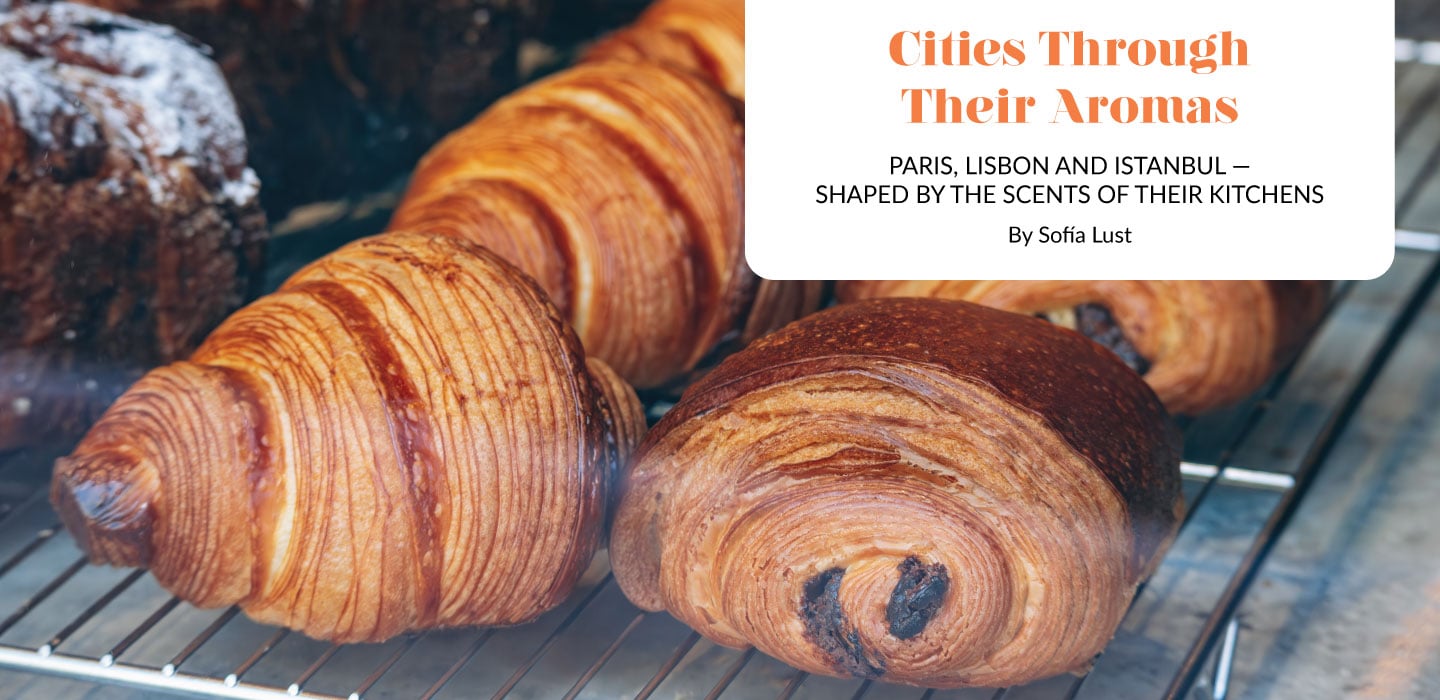

Paris begins with butter and coffee
Outside Paris’ Du Pain et des Idées, one of the city’s most respected boulangeries, the air carries the scent of freshly baked croissants and pain au chocolat. Butter is the foundation of French pastry, and here it reveals its full character — delicate, layered and slightly sweet. Nearby cafés prepare espresso as part of their morning ritual. At Café de Flore, open since the 1880s and once visited by Simone de Beauvoir and Jean‑Paul Sartre, the scent of coffee blends with toasted baguette and fruit preserves.
Paris is also defined by its respect for ingredients. At Le Comptoir de la Gastronomie, near Les Halles, foie gras is prepared with great care and often paired with Sauternes, a golden dessert wine from Bordeaux with notes of honey and apricot. Along Rue Montorgueil, one of the city’s oldest market streets, shops display seasonal fruit, aged cheeses like Comté and elegant pastries such as tarte aux fraises, filled with fresh strawberries and cream.
For a more modern expression of Parisian cuisine, Septime, consistently ranked among the world’s best restaurants, offers tasting menus built around seasonal ingredients. Dishes like roasted pigeon, wild mushrooms and fermented vegetables show how Paris continues to evolve while honoring tradition. In Paris, aroma drifts upward from kitchens below street level, reminding you that something extraordinary is always underway.
Lisbon cuisine is shaped by sea, sugar and sun
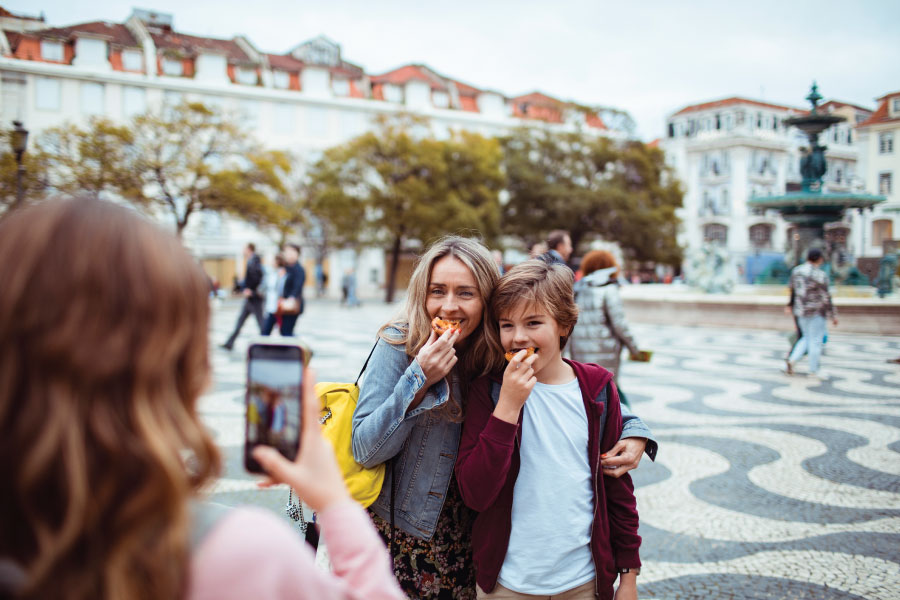
Lisbon stretches across hills above the Tagus River, open to light and ocean air. A historic Belém bakery produces the city’s most iconic pastry. Pastéis de Belém’s custard tart, with its golden surface and crisp layers, releases gentle sweetness balanced by cinnamon and lemon. The recipe has remained unchanged since the 19th century.
Paired with a small espresso, it creates one of Lisbon’s essential daily pleasures. Seafood defines the city’s deeper identity. At Cervejaria Ramiro, widely considered one of Europe’s great seafood restaurants, tables fill with scarlet shrimp, garlic clams and delicate crab.
The preparation is simple, allowing the natural qualities of the ingredients to remain clear. In Bairro Alto, Prado offers a contemporary approach, focused on seasonal products. Dishes may include fresh prawn with citrus or roasted vegetables finished with olive oil from Alentejo, one of Portugal’s most important agricultural regions. Markets also reflect Lisbon’s connection to the ocean. At Mercado da Ribeira, vendors present fresh sardines, octopus and herbs alongside bottles of vinho verde, a light Portuguese wine with bright acidity. Portugal’s wine culture remains one of Europe’s most distinctive wine traditions. In Lisbon, these flavors reflect a city that lives in constant contact with the sea.
Istanbul reveals itself through spice
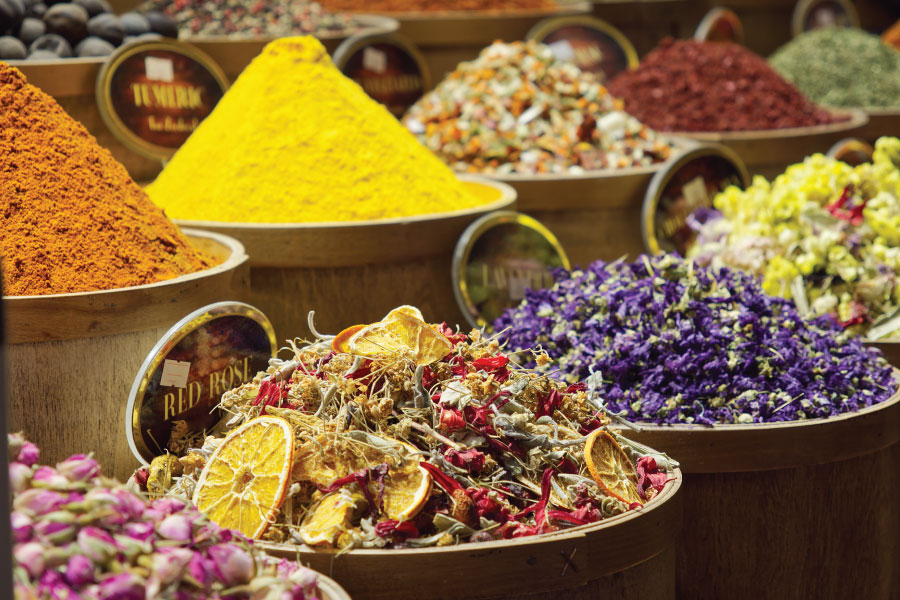
Istanbul exists between continents, and its cuisine reflects centuries of exchange. The Spice Bazaar, active since 1664, offers one of the clearest introductions to the city. Displays of saffron, dried mint, sumac and chili flakes create a landscape shaped by global trade. These ingredients form the foundation of Turkish cooking, carrying centuries of flavor and tradition.
Bread remains a staple of daily life. Simit, a circular bread coated in sesame seeds, is baked and sold throughout the city. Along the Bosphorus, restaurants such as Karaköy Lokantası present traditional dishes with refinement. Slow‑cooked lamb, roasted eggplant and yogurt enriched with olive oil show the balance that defines Turkish cuisine.
For a more elevated experience, Mikla, one of Istanbul’s most celebrated restaurants, offers contemporary interpretations of Anatolian ingredients. Dishes such as grilled lamb with wild herbs reflect both tradition and innovation.
From its hilltop location, the view extends across domes, minarets and water, reinforcing the city’s layered identity.
Coffee provides the final note. Turkish coffee is brewed slowly in small copper pots and poured unfiltered into delicate cups, leaving a dense layer of grounds at the bottom. Its intense flavor and thick texture mark the close of a meal.
Paris, Lisbon and Istanbul cannot be understood through landmarks alone. Their true identity emerges through ingredients, craft and tradition. To experience them fully is to allow each destination to reveal itself gradually, through flavor, memory and time.